Chemical formula of ISRIB A15
Molecular formula: C₂₂H₂₂Cl₄N₂O₄
98%+
Purity
COA
Per batch
2013
UCSF discovery
Most Popular ✓ In stock

ISRIB A15

C₂₂H₂₂Cl₄N₂O₄

Ultra‑potent ISRIB analogue with enhanced bioavailability. Targets eIF2B.

🚚 Free Worldwide Shipping on all orders — limited-time launch offer

Order ISRIB A15

ISRIB A15

Ultra Potent Analog
Purity:≥98% (HPLC)
COA:Included

Select Format

Select Quantity

Trial
100mg
$60
Trial
500mg
$130
Standard
1g
$200/g
Serious Users
5g - 9g
$170/g
Save 15%
Bulk
10g - 30g
$160/g
Save 20%
Min: 100mg • Max: 30g • For larger orders, contact us
Total Price: $200.00
Quantity: 1g (1000mg)
Price per gram: $200.00/g
📦 Standard Tier
  • COA available per batch
  • Worldwide shipping
  • Secure packaging
  • Support via Email/Telegram/Signal
  • Payments arranged individually

Scientific background

Understanding ISRIB A15

A look at the pharmacology, research applications, and mechanism behind the highest-potency eIF2B activator in the ISRIB compound family.

What is ISRIB A15?

ISRIB A15 (also known as ISR-IN-2) is an analog of ISRIB, developed through structure-activity relationship (SAR) studies at UCSF. Unlike the parent molecule — which suffered from poor aqueous solubility limiting its oral utility — A15 incorporates dichlorophenoxy groups that dramatically improve both potency and pharmacokinetic profile.

At its core, A15 is a molecular stabilizer of the eIF2B decamer complex. Under cellular stress, phosphorylated eIF2α binds and inactivates eIF2B — shutting down protein synthesis globally. A15 binds at the β/δ subunit interface of eIF2B, acting as a "molecular staple" that locks the decameric complex in its active conformation regardless of eIF2α phosphorylation state. This is a fundamentally different intervention point than nootropics that modulate neurotransmitter levels.

Property Detail
Chemical nameN,N'-((1r,4r)-cyclohexane-1,4-diyl)bis(2-(3,4-dichlorophenoxy)acetamide)
Molecular formulaC₂₂H₂₂Cl₄N₂O₄
Mechanism classeIF2B activator / ISR inhibitor
Primary targeteIF2B (eukaryotic initiation factor 2B)
EC500.8 nM (vs 5 nM for original ISRIB — 6.25× more potent)
BBB permeabilityHigh — rapid CNS equilibration (~8h plasma half-life)
Research statusNext-generation ISR tool compound

The ISR Window — targeted suppression of chronic stress signaling

The Integrated Stress Response is a conserved cellular program triggered by four distinct kinases (PERK, GCN2, HRI, PKR), each responding to different stressors: unfolded proteins, nutrient deprivation, heme deficiency, and viral infection. All four converge on a single phosphorylation event: eIF2α-Ser51. Once phosphorylated, eIF2α acts as a competitive inhibitor of eIF2B, halting global protein synthesis.

In healthy tissue, this is a brief protective pause. In aging brain and chronic stress conditions, eIF2α phosphorylation becomes tonically elevated — creating a persistent brake on the protein synthesis required for long-term potentiation, memory consolidation, and synaptic remodeling.

Aging Brain

ISR becomes chronically activated in the aging brain. eLife 2020: ISRIB treatment in aged mice (equivalent to 65+ human years) restored spatial learning and memory to levels comparable to young mice. Improvements persisted weeks after dosing cessation — suggesting restoration of functional capacity rather than temporary masking.

Traumatic Brain Injury

2017 landmark study (Rosi/Walter, UCSF): ISRIB reversed memory deficits in mice weeks after traumatic brain injury. A short treatment course "reset" chronically activated ISR in neurons, restoring dendritic spine density and working memory performance to levels indistinguishable from uninjured controls.

eIF2B-Related Disorders

ISRIB A15 and analogs have shown efficacy in models of Vanishing White Matter Disease (VWMD) — a genetic leukodystrophy caused by destabilizing mutations in eIF2B subunits. A15 rescues eIF2B complex stability in VWMD-associated mutants, identifying it as a research tool for eIF2B structural biology and therapeutic development.

"Unlike PERK inhibitors — which completely abolish ISR signaling and cause dose-limiting pancreatic toxicity — A15 operates within a defined activation window. It suppresses low-to-moderate chronic ISR activity but does not block strong acute stress responses, which remain essential for cell survival. This selectivity profile, documented by the Walter Lab (UCSF), explains the absence of overt toxicity in animal studies."


Translational restoration — how A15 reconnects cognition to protein synthesis

Memory formation is not merely electrical — it requires the physical synthesis of new proteins at synapses. Long-term potentiation (LTP), the cellular correlate of learning, depends on local dendritic protein synthesis within minutes to hours of synaptic activation. When the ISR is active, this synthesis is blocked upstream before it can begin.

A15’s intervention point — eIF2B stabilization — sits directly in this pathway. By maintaining eIF2B in its active decameric form, A15 allows translation to resume even in the presence of stress signals, restoring the protein supply chain for synaptic plasticity.

LTP & Synaptic Plasticity

eIF2B is the rate-limiting factor for mRNA translation initiation at activated synapses. A15’s eIF2B stabilization allows continued synthesis of plasticity-related proteins (Arc, CaMKII, BDNF) during periods of cellular stress — maintaining the molecular substrate for long-term memory formation when it would otherwise be suppressed.

Integrated Stress Response & Neurodegeneration

Multiple neurodegenerative conditions (Alzheimer’s, Parkinson’s, ALS, prion disease) involve chronic ISR activation as a shared pathological mechanism. A15 provides a pharmacological probe for isolating the contribution of eIF2B dysregulation to disease progression — distinct from approaches targeting specific protein aggregates.

Decamer Stability & Structural Biology

The eIF2B decamer (composed of two α₂βγδε tetramers) is the enzymatic core of translational control. A15’s binding site at the β/δ interface provides a chemical handle for structural studies of decamer assembly, making it a valuable tool for cryo-EM and crystallography research into ISR biology.


Mechanism of action

1

eIF2B Binding

A15 crosses the blood-brain barrier rapidly (high CNS penetration, ~8h plasma half-life in rodents) and binds with sub-nanomolar affinity (EC50 ≈ 0.8 nM) at the interface of the eIF2B β and δ subunits — a site geometrically distinct from the eIF2α regulatory interface.

2

Decamer Stabilization

Binding induces conformational stabilization of the eIF2B decameric complex, facilitating assembly of two eIF2B(βγδε) tetramers with one eIF2B(α)₂ dimer. This decamer is the maximally active form of eIF2B and is sterically resistant to competitive inhibition by phosphorylated eIF2α — effectively overriding the ISR brake without eliminating stress sensing.

3

Translational Restoration

Active eIF2B catalyzes GDP→GTP exchange on eIF2α, regenerating the eIF2-GTP-Met-tRNAi ternary complex required for ribosomal scanning and AUG recognition. Restored ternary complex availability enables resumption of cap-dependent mRNA translation — including synthesis of plasticity proteins at activated synapses.


Key research applications

The breadth of A15’s utility spans from fundamental translational biology to disease-specific therapeutic probe development. Below are the primary research domains where A15 is deployed as the preferred high-potency ISR tool compound.

Neurodegeneration & ISR Biology

A15 is the highest-potency available ISR inhibitor, making it the preferred tool compound for dissecting eIF2B function in neurodegeneration models. Active in ALS, Alzheimer’s, Parkinson’s, and prion disease research contexts where chronic ISR activation is a shared pathological feature.

TBI & Neurological Recovery

Based on the 2017 Rosi/Walter study demonstrating post-TBI memory restoration in rodent models. A15 enables investigation of the temporal window for ISR intervention after brain injury and the relationship between eIF2B activity and neurological recovery trajectories.

Aging & Cognitive Decline

The ISR becomes chronically elevated in aged brain tissue. A15 provides a pharmacological tool for studying whether ISR-dependent translational suppression is a driver — rather than correlate — of age-related cognitive decline, and for exploring intervention windows in aging models.

eIF2B Structural Biology

A15’s defined binding site at the eIF2B β/δ interface makes it an ideal ligand for cryo-EM co-crystallization studies, hydrogen-deuterium exchange mass spectrometry (HDX-MS), and allosteric network mapping of the eIF2B decamer complex.

Vanishing White Matter Disease

VWMD is caused by heterozygous mutations across eIF2B subunits that destabilize decamer assembly. A15 rescues mutant eIF2B complex stability in cellular models of VWMD, positioning it as a probe for gain-of-function stabilization strategies in eIF2B-related leukodystrophies.

ISR-Plasticity Coupling

For researchers investigating the relationship between cellular stress responses and synaptic plasticity, A15 enables conditional restoration of eIF2B activity in specific contexts — allowing dissection of which aspects of LTP, fear memory, and spatial navigation are ISR-gated.

Technical Specifications

🧪 Chemical Properties

Formula:C₂₂H₂₂Cl₄N₂O₄
MW:520.24 g/mol
Purity:≥98% (HPLC)
Form:White/off‑white powder
Solubility:DMSO

📦 Storage & Handling

Storage:2-8°C
Stability:2+ years
Light:Store in dark
Moisture:Keep dry
Container:Amber glass vial

📋 Documentation

COA:✓ Included
¹H NMR:✓ Available
¹³C NMR✓ Available
Safety Data:✓ Provided

Quality verification

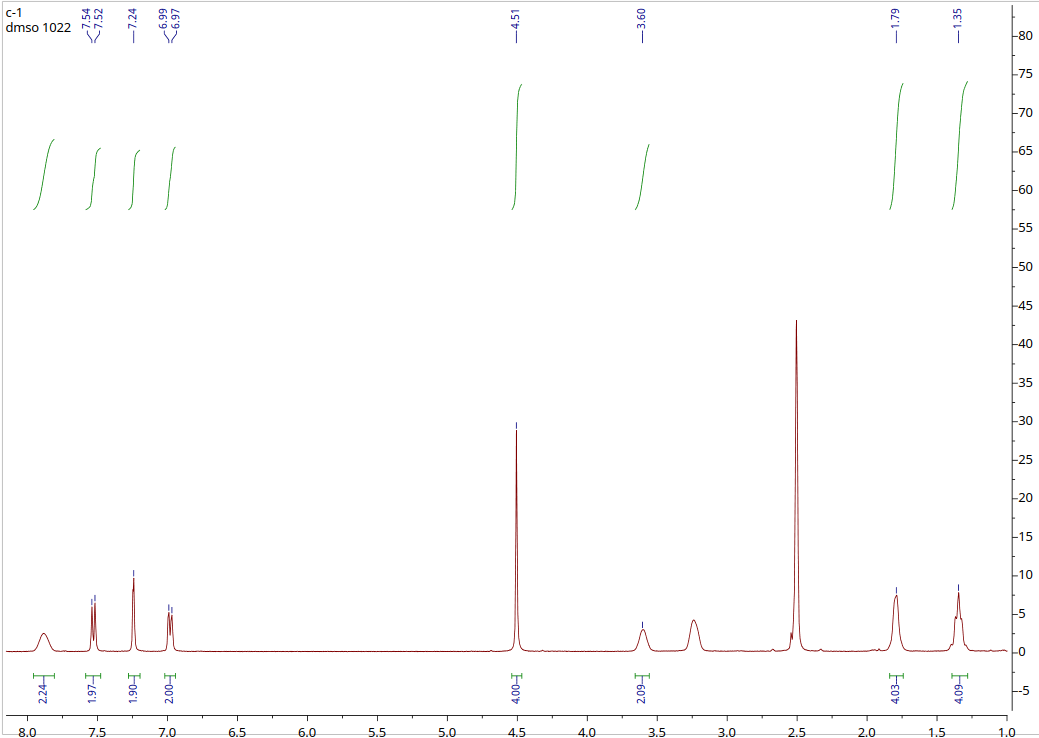
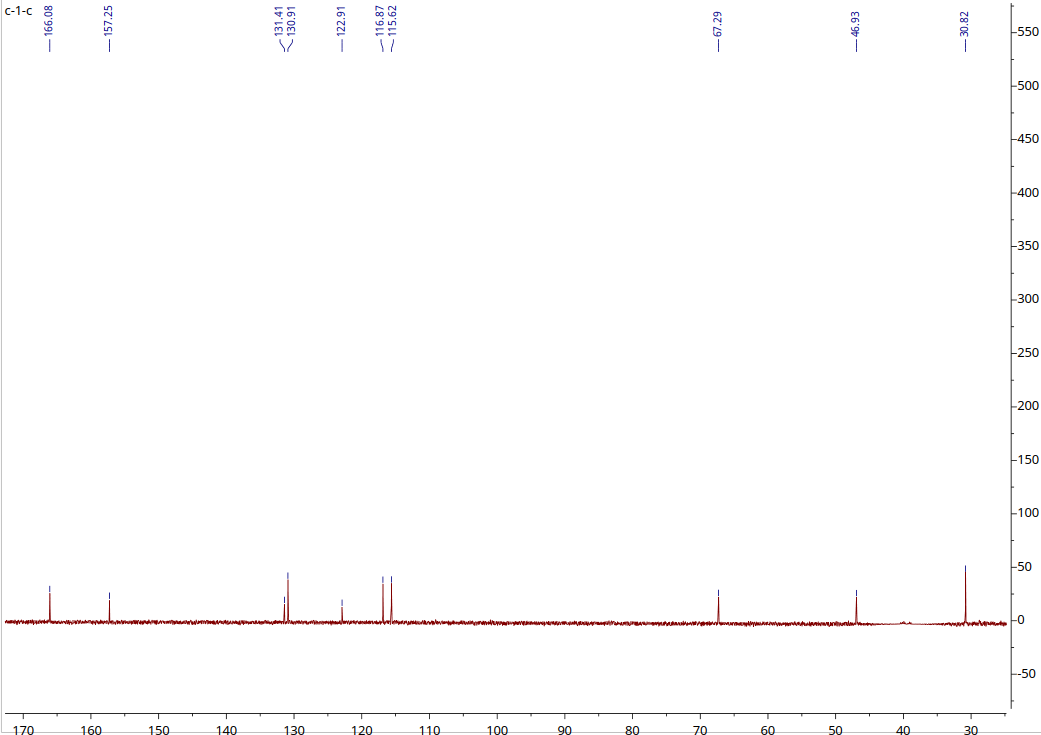
NMR Characterization

Every batch is characterised by ¹H and ¹³C NMR spectroscopy. We publish both processed spectra and raw FID data so any researcher with NMR software can independently verify the structure and purity of what they receive.

Raw FID files are compatible with MestReNova, TopSpin, and other standard NMR processing software.

¹H NMR

400 MHz · DMSO-d₆

Batch 2
¹H NMR spectrum of ISRIB A15 — Batch 2

Key signals: δ 7.54 (d, ArH, 2H), 7.24 (d, ArH, 2H), 6.99 (d, ArH, 2H), 4.51 (s, OCH₂, 4H), 3.60 (m, CH, 2H), 1.79 (m, CH₂, 4H), 1.35 (m, CH₂/CH₃, 4H)

¹³C NMR

100 MHz · DMSO-d₆

Batch 2
¹³C NMR spectrum of ISRIB A15 — Batch 2

Key signals: δ 166.08 (C=O amide), 157.25 (ArC-O), 131.41, 130.91, 122.91, 116.87, 115.62 (ArCH), 67.29 (OCH₂), 46.93 (CH), 30.82 (CH₂)

Download raw FID data

We don’t just show you pictures. Download the original spectrometer output and process it yourself in MestReNova, TopSpin, or any compatible NMR software. Every peak, every integration — fully verifiable.

¹H FID data (.zip) ¹³C FID data (.zip)